image_pdfimage_print
Modernising Allocation: U-Boot Upgrades to dlmalloc 2.8.6

Modernising Allocation: U-Boot Upgrades to dlmalloc 2.8.6

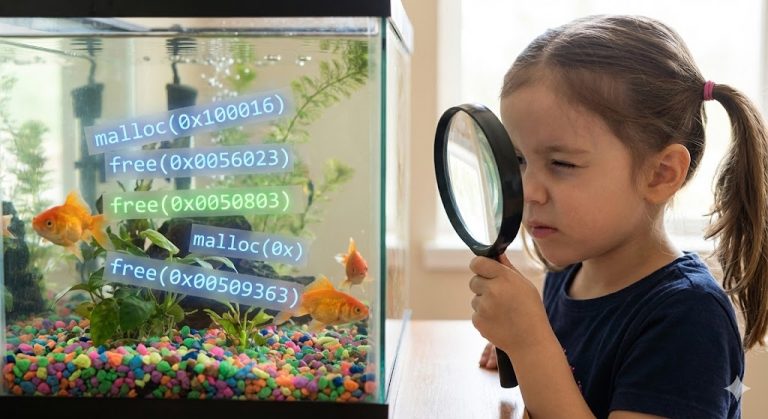
For over two decades—since 2002—U-Boot has relied on version 2.6.6 of Doug Lea’s malloc (dlmalloc, old docs) to handle dynamic memory allocation. While reliable, the codebase was showing its age. In a massive 37-patch series, we have finally updated the core allocator to dlmalloc 2.8.6. This update brings modern memory efficiency algorithms, better security checks,…

Cleaning up the Nulls: Introducing ofnode Stubs for Non-DT Builds

Cleaning up the Nulls: Introducing ofnode Stubs for Non-DT Builds

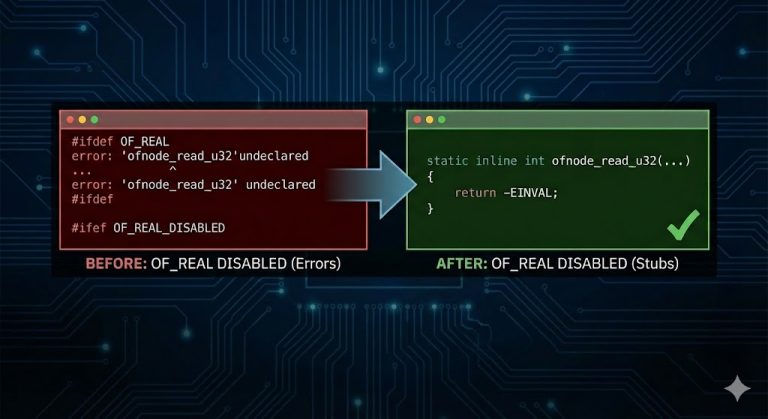
In the world of U-Boot, the Device Model (DM) and Device Tree (DT) are the standard for hardware description. However, U-Boot runs on a massive variety of hardware, including constrained systems where full Device Tree support (OF_REAL) might be disabled. A recent patch cleans up how the core handles these “no-Device-Tree” scenarios, ensuring that code…

Introducing Codman: A Deep Dive into U-Boot Build Analysis

Introducing Codman: A Deep Dive into U-Boot Build Analysis

U-Boot is a massive project. With thousands of files, nearly endless configuration possibilities, and complex Kconfig dependencies, a single board configuration often only compiles a small fraction of the total source tree. For developers and maintainers, this complexity often leads to difficult questions: Simply searching for CONFIG_ macros or header inclusions is rarely enough. The…

Tidying up the FIT: Refactoring, Testing, and Shrinking U-Boot

Tidying up the FIT: Refactoring, Testing, and Shrinking U-Boot

Flattened Image Trees (FIT) are a cornerstone of modern U-Boot booting, offering a flexible way to package kernels, device trees, ramdisks, and firmware. However, the code responsible for printing information about these images—the output you see when running mkimage -l or iminfo—has been around for a long time. As with any legacy code, it had…

New video command and unified embedded image handling

New video command and unified embedded image handling

U-Boot has long supported embedding a graphical image directly into the binary – like the boot logo and the recently added BGRT (Boot Graphics Resource Table) image for EFI systems. But the way these images were handled was a bit of a mixed bag, with different patterns for different images and custom boilerplate for each…

Enhancing EFI Boot and Developer Experience

Enhancing EFI Boot and Developer Experience

We’ve just rolled out a series of updates aimed at improving the U-Boot EFI application, with a special focus on streamlining the testing and debugging process, particularly for ARM platforms. This batch of 24 patches introduces several quality-of-life improvements, from better debugging tools to more robust boot procedures. Let’s dive into the key changes. Streamlining…

Spring Cleaning: Refactoring the U-Boot Test Suite for a Brighter Future

Spring Cleaning: Refactoring the U-Boot Test Suite for a Brighter Future

A robust and efficient test suite is the backbone of a healthy open-source project. It gives developers the confidence to add new features and refactor code without causing regressions. Recently, we’ve merged a significant 19-patch series that begins a much-needed cleanup of our Python test infrastructure, paving the way for faster, more reliable, and more…

Giving FIT-loading a Much-Needed Tune-Up

Giving FIT-loading a Much-Needed Tune-Up

The U-Boot boot process relies heavily on the Flattened Image Tree (FIT) format to package kernels, ramdisks, device trees, and other components. At the heart of this lies the fit_image_load() function, which is responsible for parsing the FIT, selecting the right images, and loading them into memory. Over the years, as more features like the…

Streamlining the Final Leap: Unifying U-Boot’s Pre-OS Cleanup

Streamlining the Final Leap: Unifying U-Boot’s Pre-OS Cleanup

What happens in the final moments before U-Boot hands control over to the operating system? Until recently, the answer was, “it’s complicated.” Each architecture like ARM, x86, and RISC-V had its own way of handling the final pre-boot cleanup, leading to a maze of slightly different functions and duplicated code. It was difficult to know…